
.jpg)
Black Friday Cyber Monday (or BFCM, if you've been around eCommerce long enough) is basically our industry's gold rush. Traffic spikes, carts explode, dashboards light up... and for a moment, it feels like everything you planned all year finally pays off.
But here's the part nobody brags about on LinkedIn: most of those shiny new customers disappear just as fast as they showed up.
A Salesforce study from 2023 pegged it at around 79% of holiday shoppers not returning within six months. And honestly, that tracks with what I've seen in Shopify stores. Tons of sales. Very little loyalty. Massive revenue left on the table.
So the real game isn't just "winning" BFCM. It's what you do after the dust settles.
By the time you're done reading, you'll have a clear, no-fluff roadmap to keep more of those BFCM buyers around, lift your LTV, and walk into BFCM 2025 with way more confidence. And honestly? Once you get this part right, the whole "holiday rush stress" hits very differently.
Understanding BFCM Shoppers: The Data Behind the Behavior
Before we start talking tactics, you need to understand who you're actually dealing with during BFCM. And honestly, once you see the behavioral patterns, the rest of the strategy makes way more sense.
The Psychology of Holiday Shoppers
BFCM isn't just a sale weekend. It's a whole mindset. People shop differently. They're in this weird mix of "I might miss out" energy plus the thrill of grabbing a deal they probably didn't even plan on buying.
Most of the BFCM purchases were straight-up impulse buys. Flash sales, countdown timers, those "only 2 left!" banners... they push people to act fast.
But when the adrenaline disappears? So does the shopper. Sometimes they forget the brand entirely; other times, the post-purchase regret kicks in.
And here's a bit that surprises some brands: most shoppers are bouncing between devices and apps.
Google’s numbers say nearly 70% of searches happen on mobile. People are literally price-checking you against competitors in real time. If your mobile site is even slightly janky, they’re gone.
Key Stats on BFCM Churn and Loyalty
Repeat shoppers drive more revenue than new customers. Klaviyo's recent BFCM insights show repeat shoppers produce materially higher GMV during the holiday period.
In their 2025 analysis, repeat buyers' GMV outpaced new-buyer GMV by roughly 45%, which makes keeping those buyers far more valuable than chasing new traffic alone.
Long-term repeat buyers spend substantially more over time. Bain & Company's classic research on online customer loyalty found that customers who stick around spend significantly more in later stages of the relationship.
Email performance is noisy around the holidays. Marketers face inbox fatigue. Multiple industry analyses show email opens and engagement become harder to move during and immediately after Cyber Week:
- Salesforce measured about a 4.9% decline in open rates when comparing Cyber Week sends to the prior eight-week period (a sign that heavier sending and inbox competition reduce per-message engagement)
- Litmus and other email analytics providers likewise report holiday-specific shifts in timing and engagement that make targeted, high-value sends more effective than blanket blasts
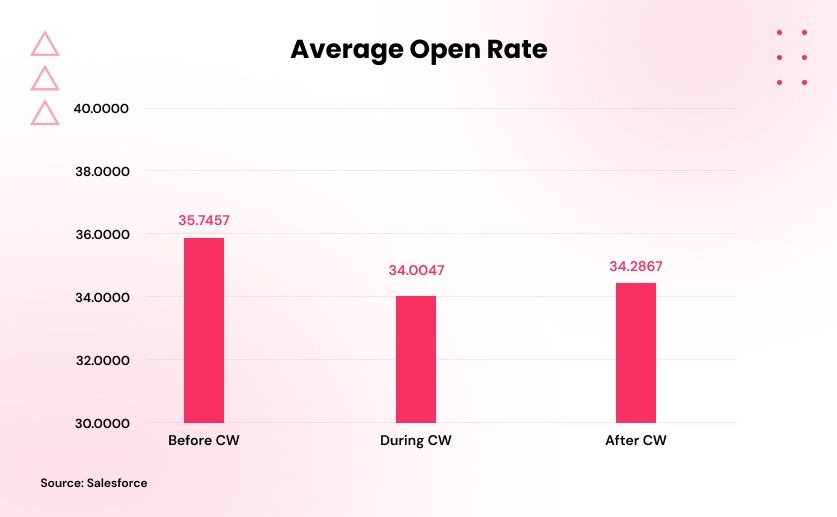
What that means practically: repeat buyers are both more valuable and easier to monetize during BFCM, but email (and other channels) get noisier. Retention requires smarter segmentation, cross-channel follow-up (SMS, push), and non-email touchpoints to lock in those buyers after the sale.
10 Strategies to Turn BFCM Buyers into Loyal Customers
Alright, now let's get into the part that actually moves the needle. Think of this as a phased system that starts the moment someone hits "place order" and keeps rolling long after BFCM is over.
1. Optimize the Post-Purchase Experience
The first 24 hours... probably the most underrated window in all of eCommerce. Customers are still in "shopping mode," and their attention hasn't drifted.
So hit them with a thank-you email that feels personal, not a generic template with a logo slapped on top. If they bought a laptop, casually recommend a sleeve, a stand, or whatever makes sense.
According to HubSpot’s benchmark data, marketers report that segmented (i.e., personalized) emails generally drive higher CTR compared to unsegmented ones.
Quick wins for post-purchase:
- Send personalized thank-you emails within 1 hour
- Include smart product recommendations based on purchase
- Offer special perks like free returns or a one-time discount for coming back
- Share helpful content (setup guides, care tips, usage ideas)
Tiny perks build goodwill faster than any fancy ad campaign.
2. Discounts to Drive the Second Purchase
Discounts shouldn't be spammed. They should be strategic. Instead of sending the same coupon to everyone, use behavior-based offers that nudge shoppers back without cutting into your margins.
Here's the simple playbook:
- First-time buyer? Send a small next-order incentive
- Viewed bundles but bought only one item? Offer a smart bundle deal
- Removed items during checkout? Trigger a targeted win-back offer
- High-value customers? Give VIP-only perks that feel exclusive
These precise, context-driven discounts bring shoppers back faster and keep your profits intact.
If you’re using Shopify, discount apps can set this up in minutes. If you're on WooCommerce, plugins offer similarly advanced discount logic with no manual work needed.
3. Leverage Personalization and Segmentation
Blanket marketing won't land with BFCM buyers. They're too distracted, too deal-driven, and too used to personalizing everything.
Start by segmenting them by behavior:
- Who splurged vs. who bought the minimum
- Who browses five times before buying
- Who only purchased because of a discount
- What product categories do they care about
Tools like Klaviyo make this part easy.
Once you've got your groups, send dynamic content that actually matches what they care about. Think Netflix-style personalization, except for products instead of shows. It's the same logic: the more relevant the recommendation, the higher the conversion.
4. Build a Loyalty Program That Delivers Value
A loyalty program shouldn't feel like a homework assignment. Keep it simple, keep it rewarding, and make the perks feel worth chasing.
Tiered rewards always win:
- Start basic (maybe points, a small discount, free shipping)
- Let VIP status unlock earlier sale access or exclusive drops
- Add challenges or "double points" windows to keep it fun
Starbucks is a great example of how tiered loyalty programs keep customers engaged.
Their Green and Gold levels make the rewards feel more achievable, and the mix of tiers, perks, and personalized offers encourages people to come back more often.
Here's what a simple tier layout might look like:
- Bronze – First purchase → 5% off next order
- Silver – Spend $200 → Free shipping + 10% off
- Gold – Spend $500 → Early access + 15% off
And yes, this kind of framework works beautifully on Shopify. Modern subscription and rewards apps can automate the entire flow, from points tracking to redemption emails. Roll it out and mention it in every BFCM-related email.
5. Engage Through Multi-Channel Follow-Up
Email alone can't carry this. BFCM shoppers hop channels constantly, so your follow-up needs to follow them, not the other way around.
SMS and push notifications are great for quick nudges:
- Back-in-stock alerts
- Low-inventory updates
- "Your order's on the way!" kinds of messages
- With extremely high engagement open rates, SMS is basically cheating
Layer in social retargeting too. Platforms like Meta will happily remind shoppers about what they bought and what they might want next.
Industry reports show that retargeted shoppers are about 3× more likely to convert compared to new visitors, and academic research also finds that retargeting increases the chance of a customer returning to a site.
And don't be afraid to storytell: If someone bought a smartwatch, send them a little mini-series on Instagram: "5 cool things you can do with your new watch." Toss in user photos. It makes the brand feel alive.
6. Measure and Iterate with Data
Retention only works if you keep testing and tightening things.
Watch your key metrics:
- Customer Lifetime Value (CLV)
- Churn rate
- Repeat purchase rate
- Time between purchases
You don't need a data science team. Tools like Google Analytics 4 or Mixpanel already give you a good starting point.
A/B test your messaging too. Even tiny subject-line changes can boost opens. Phrases with clarity or exclusivity (like "Exclusive BFCM Insider") often outperform generic ones such as "Thanks for Shopping." Small tweaks can make a big difference.
And after BFCM, pull up heatmaps from Hotjar. See where customers get stuck or bounce. Fix the friction points, and your retention numbers climb without you doing anything fancy.
7. Launch BFCM-Specific Win-Back Flows
Most BFCM shoppers cool off fast, usually within 30–45 days. So before they forget you exist, trigger a dedicated win-back sequence that feels helpful, not pushy.
Start with a simple check-in email:
- "Hey, hope you're loving your order. Need any tips?"
- Then follow it up with a usage guide or a short "in case you missed it" roundup of what they browsed but didn't buy
Brands that run BFCM win-back flows usually recover 10–20% of almost-lost customers... which is huge when you multiply it by thousands of seasonal buyers.
8. Turn Post-Purchase Education Into a Loyalty Engine
Deals get customers in the door, but education is what keeps them coming back.
Most people barely scratch the surface of what they bought, so teach them.
Educational content ideas:
- Skincare buyer? Send a "How to layer products" guide
- Blender buyer? Send 3 go-to recipes
- Apparel buyer? Send styling suggestions
- Tech buyer? Send setup tutorials and advanced tips
The more value you help them unlock, the more likely they are to return and the less likely they are to send the product back. Education is retention disguised as customer care.
9. Convert BFCM Shoppers Into Subscribers
If you sell anything replenishable (supplements, beauty, pet care, home essentials), BFCM buyers are prime candidates for subscriptions.
Give them reasons to opt in:
- "Lock in your BFCM price for 12 months."
- "Free sample on your first subscription delivery."
- "Skip or pause anytime with zero friction."
Subscription customers often deliver significantly higher lifetime value than one-time buyers because of predictable recurring revenue and improved retention.
So even if a shopper originally came for a discount... a smart subscription offer can turn them into predictable recurring revenue.
Modern subscription management tools integrate directly with Shopify and make it easy to offer flexible plans without technical headaches.
10. Strengthen CX, Returns, and Unboxing to Boost Retention
Most brands overlook this, but your operational experience is a huge retention factor. Slow shipping, confusing returns, or bad packaging will undo all your hard-earned BFCM sales.
Returns and shipping costs kill loyalty. One way to win back trust is by using shipping discounts strategically
Operational excellence checklist:
- Keep customers updated with fast, clear notifications
- Make returns painless (ideally self-serve)
- Add a QR code inside the package linking to helpful content
- Include tiny touches: a small freebie, a thank-you card, or a loyalty invite
And yes, even tiny touches matter. A smooth post-purchase journey builds trust, and trust drives repeat revenue.
Actionable Takeaways: Your BFCM Loyalty Checklist
Alright, let's make this actually useful, not another "do this, do that" list. Here's a practical flow you can plug into your own stack. Tweak it based on whatever tools or bandwidth you've got.
Start by taking a hard look at your setup. Seriously. Pull up your BFCM numbers, skim through where people bailed, and note the segments that actually spent money. You’ll spot patterns faster than you think.
Then get your automations talking to each other. Email, SMS, loyalty… whatever you use. Half the battle is making sure those follow-ups don’t get stuck in limbo because two apps don’t sync properly. Zapier usually saves the day here.
Once that’s humming, sketch out a simple content calendar. Nothing fancy. Just a loose plan for what you’ll send after BFCM, maybe weekly tips, small offers, or something that reminds customers you exist without sounding desperate.
If you’re feeling unsure, run a small pilot. Pick a slice of your BFCM list and try your loyalty flow just on them. Watch the numbers. You’ll know within a couple of weeks whether you’re onto something.
Conclusion
Turning your BFCM shoppers into loyal customers isn't magic. It's just the boring-but-powerful trio of strategy, data, and staying consistent. When you tighten your post-purchase game, personalize the heck out of your messaging, and build a loyalty program that people actually enjoy, you'll see buyers stick around much longer.
And honestly, the numbers speak for themselves. Personalization alone can bump retention and good tiered programs? They keep half their members engaged. Wild how small tweaks deliver big revenue lifts.
The real opportunity isn't in the BFCM weekend itself. It's in the 90 days after, when most brands go silent, and you keep showing up with value, education, and smart incentives.
Start with one or two strategies from this list. Test them. Measure what works. Then layer in more as you go.
Your future self (and your Q1 revenue) will thank you.
FAQ
People search for these questions constantly around BFCM, so let's clear things up.
- What is BFCM, and why does everyone obsess over it?
It’s Black Friday Cyber Monday, that massive shopping window from late November into early December.
- How do I actually build loyalty after Black Friday?
Start simple: send a thank-you, offer a little perk, and follow up in a way that feels personal (not those generic "Hi {first_name}!" blasts). Keep nurturing through segmented content. The goal is to give shoppers a reason to come back without being pushy.
- What tools make BFCM retention easier?
Klaviyo handles email automation. Loyalty Gator is great for reward programs. Google Analytics shows you what's working. AIOD discount app for all the discounts set up. Put them together, and you get automation that feels almost unfairly efficient.
- How do I calculate lifetime value for BFCM buyers?
Use this quick math: CLV = (Average Order Value × Purchase Frequency × Customer Lifespan). So if someone spends about $100 twice a year for three years, that's $600 in lifetime value. Most CRMs can help you track these numbers without doing napkin math every time.
- What mistakes should I avoid with BFCM customers?
Over-emailing is the classic one. I've seen unsubscribe rates jump 20% right after the holidays just because brands spammed too hard. Another big one? Sending the same generic offer to everyone. Personalization is the line between loyalty and churn.
Author Name: Pragnesh Patel
Author Bio: Pragnesh Patel is a digital marketing expert with 4+ years of experience in paid ads (Google, Meta, Reddit) and co‑marketing strategies like guest blogging and content partnerships. He’s skilled in GTM, GA4, and Google Merchant Center, helping Shopify apps and eCommerce brands track performance and drive growth.