




So, you've decided to dive into the exciting world of subscription boxes. The promise of recurring revenue, predictable demand, and a direct line to your customers is undoubtedly alluring. But here's the unvarnished truth: it's not all sunshine and automatic renewals. Just like any great idea, the subscription model comes with its own unique set of challenges, and if not handled correctly, those challenges can quickly turn into significant business headaches.
This isn't about scaring you away; it's about equipping you with the foresight to navigate potential pitfalls. Think of this as your mentor's guide to not just surviving, but thriving, in the subscription box universe. We're going to explore the common traps that ensnare businesses and frustrate customers, then arm you with the strategies to turn those potential problems into opportunities for building a loyal, engaged, and utterly delighted subscriber base.
The allure and the abyss: why subscription boxes can be a double-edged sword
The subscription model, at its core, is brilliant. It offers convenience to the customer and stability to the business. You get to curate experiences, introduce new products, and build a relationship with your audience over time. However, this very brilliance can sometimes blind businesses to the lurking dangers, creating an abyss where good intentions go to die.
The "Set it and forget it" trap for businesses
For businesses, the appeal of "set it and forget it" is strong. You design a box, set up the billing, automate shipping, and then… you're done, right? Wrong. This mindset is perhaps the most insidious trap. It leads to complacency, a lack of innovation, and ultimately, churn. Your subscribers are not static; their needs, preferences, and expectations evolve. A business that assumes its work is done after the initial setup is essentially building a ticking time bomb. The "set it and forget it" mentality breeds stagnation, and stagnation in the subscription world is a death sentence.
The "Buyer's remorse" for customers
On the flip side, customers can fall into the "buyer's remorse" trap. They sign up, excited by the initial promise of discovery and convenience. But if that promise isn't continually renewed and enhanced, the excitement wanes. The carefully curated surprise becomes a predictable delivery, then an accumulation of unwanted items, and finally, a monthly reminder of a financial commitment they no longer value. This remorse often stems from unmet expectations, a feeling of being locked in, or simply the realization that the initial thrill has faded without anything new to replace it. When this happens, a customer's finger hovers precariously over the cancel button.
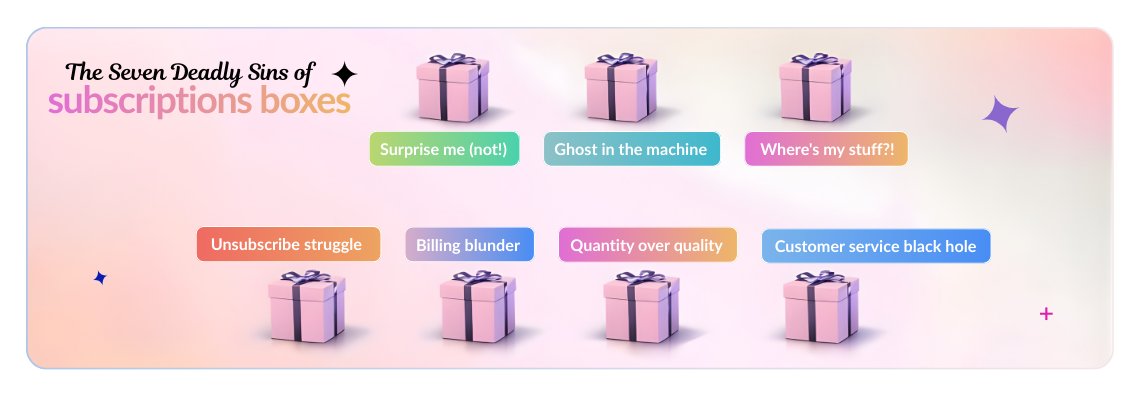
The seven deadly sins of subscription box management (and how to repent)
Let's get specific. There are common mistakes, almost like "deadly sins," that plague subscription box businesses. Understanding them is the first step toward avoiding them and, ultimately, keeping your customers happy and your business healthy.
1. The "Surprise me (not!)" problem: lack of customization and personalization
Imagine receiving a box of products tailored for dry skin when your complexion is oily, or a selection of decaf coffee when you specifically requested high-octane espresso. This isn't a delightful surprise; it's a frustrating mismatch. Many subscription boxes fall into the trap of a one-size-fits-all approach. While it simplifies logistics for the business, it drastically undermines the customer experience. People sign up for a curated experience for them, not just anybody. When customization options are minimal or non-existent, the "surprise" quickly turns into "disappointment."
How to repent: From the very beginning, bake personalization into your onboarding process. Use detailed preference questionnaires, allow subscribers to "rate" items they receive, and leverage data analytics to understand evolving tastes. Think of it less as a "box of stuff" and more as a personal shopper who gets smarter with every interaction. Offer choices, let them swap items, or even skip a box if nothing appeals to them in a given month.
2. The "Ghost in the machine" problem: poor communication and transparency
There's nothing more frustrating than feeling like you're talking to a brick wall. When subscribers have questions about their next box, shipping dates, or billing, they expect clear, timely answers. The "ghost in the machine" problem arises when communication is sparse, automated, or non-existent. Customers are left guessing, wondering, and eventually, fuming. This erodes trust faster than almost anything else.
How to repent: Be proactive and transparent. Send regular updates about what's coming, when it's shipping, and any potential delays. Create clear FAQs. Most importantly, make it easy for customers to reach a real human when they need help. Use email, live chat, or phone support, and ensure your team is well-trained and empowered to resolve issues efficiently. A little communication goes a long way in building confidence.
3. The "Where's my stuff?!" problem: shipping woes and delivery disasters
This is a physical product business, which means delivery is paramount. Late deliveries, damaged goods, or packages that simply vanish are not just inconveniences; they're direct attacks on the customer experience. Customers expect their box to arrive on time and in perfect condition. When it doesn't, the entire value proposition of convenience and delight crumbles. This problem often stems from cutting corners on shipping providers, inadequate packaging, or a lack of robust tracking systems.
How to repent: Invest in reliable shipping partners. Provide clear tracking information for every box. Over-communicate about potential delays and offer solutions (e.g., expedited shipping for next month, a discount). Package your items securely to withstand the rigors of transit. When an item is damaged, replace it quickly and without hassle. Your shipping experience is an extension of your brand.
4. The "Billing blunder" problem: opaque pricing and unexpected charges
No one likes a surprise charge on their credit card statement, especially if it's unclear what it's for. The "billing blunder" occurs when pricing is unclear, renewal dates are hidden, or customers are charged for services they didn't explicitly agree to (like auto-renewing add-ons). This isn't just annoying; it's a breach of trust and can lead to chargebacks and reputational damage.
How to repent: Be crystal clear about your pricing structure from the moment a customer signs up. Detail renewal dates, cancellation policies, and any potential additional costs. Send reminders before renewals, especially for longer-term subscriptions. Make billing statements easy to understand and provide a simple way for customers to view their payment history. Transparency in billing is non-negotiable.
5. The "Unsubscribe struggle" problem: making it hard to leave
This is arguably one of the biggest cardinal sins. Trying to trick or trap customers into staying is a short-sighted strategy that backfires spectacularly. Whether it's requiring a phone call during specific hours, burying the cancellation link deep within a labyrinthine website, or forcing customers to jump through hoops, making it difficult to unsubscribe breeds intense resentment. It screams, "We don't trust you, and we're afraid you'll leave!"
How to repent: Embrace churn as a natural part of business and make the cancellation process as straightforward as the sign-up process. A simple, intuitive "cancel subscription" button in their account settings is ideal. You can offer incentives to stay (e.g., a discount, a pause option) after they've initiated the cancellation, but never make it mandatory. A customer who leaves gracefully is far more likely to return or recommend you than one who feels trapped and angry.
6. The "Quantity over quality" quandary: filling boxes with fluff
The temptation to cram a box full of items to make it feel like a good value is strong. However, if those items are low-quality, irrelevant, or simply "filler," the perceived value plummets. Customers quickly realize they're paying for quantity over quality, leading to accumulation of unwanted junk and ultimately, dissatisfaction. This problem often arises when businesses focus too much on cost-per-item rather than the overall curated experience.
How to repent: Focus on curation, not just collection. Every item in your box should serve a purpose, align with your brand, and ideally, delight the recipient. Prioritize high-quality, thoughtful products that enhance the subscriber's experience. Less can often be more if what you deliver is truly exceptional and relevant. Ask yourself: "Would I be genuinely excited to receive this item?" If the answer is no, reconsider.
7. The "Customer service black hole" problem: neglecting your lifeline
Your customer service team is the front line of your brand. When they are under-resourced, untrained, or disempowered, customer queries fall into a "black hole" where they are ignored, poorly handled, or met with canned responses. This doesn't just frustrate customers; it actively pushes them away. Poor customer service signals that you don't value your subscribers once they've signed up.
How to repent: Invest in your customer service team. Provide thorough training, empower them to solve problems, and give them the tools they need to succeed. Make sure they understand your products, your policies, and most importantly, the value of a happy customer. View every customer interaction as an opportunity to build loyalty, not just solve a problem. Great customer service can turn a frustrated subscriber into your biggest advocate.
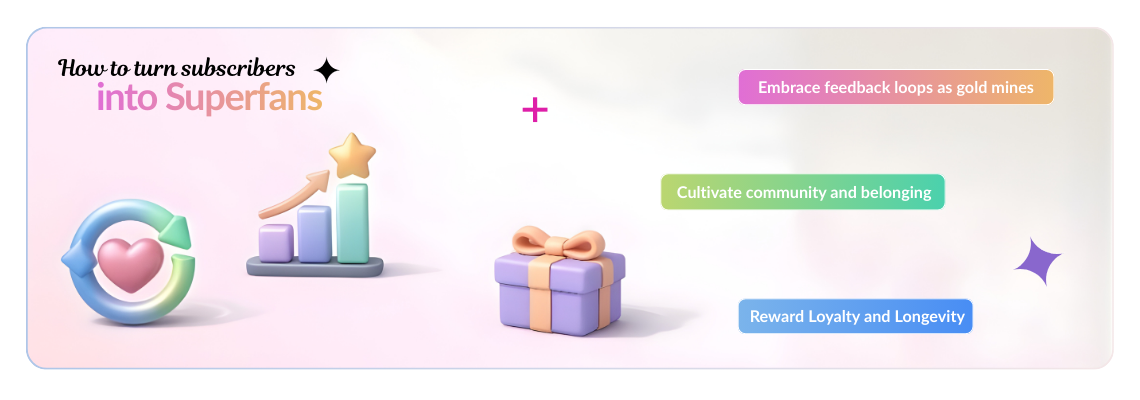
Turning subscribers into superfans: proactive strategies for success
Avoiding the "deadly sins" is essential, but merely avoiding problems won't make you exceptional. To truly thrive, you need to proactively build a relationship with your subscribers, turning them from casual customers into passionate superfans.
Embrace feedback loops as gold mines
Every piece of feedback, whether positive or negative, is a gift. It's a direct line to understanding what's working, what's not, and where you can improve. Many businesses dread negative feedback, but smart entrepreneurs see it as an opportunity. It's an unmet need, a chance to refine your offering, and a sign that your customers care enough to tell you what's wrong.
Actively solicit feedback through surveys, post-delivery check-ins, and social media listening. Don't just collect it; analyze it, identify patterns, and act on it. If multiple customers are saying the same thing, that's a signal you can't ignore. Close the loop by letting customers know how their feedback led to changes. This shows you're listening and that their voice matters, fostering a sense of ownership and loyalty.
Cultivate community and belonging
Humans are inherently social creatures. When you can tap into that innate desire for connection, you elevate your subscription box from a mere product delivery to a shared experience. Create spaces where your subscribers can connect with each other and with your brand. This could be a dedicated online forum, a private social media group, virtual events, or even local meetups.
Encourage sharing, discussion, and interaction. Feature user-generated content, run contests, and ask for their opinions on upcoming box themes or products. When customers feel like they're part of something bigger than just a monthly delivery, they become emotionally invested. They'll advocate for you, defend you, and feel a deeper connection that transcends the products themselves.
Reward loyalty and longevity
Long-term subscribers are the lifeblood of your business. Don't take them for granted. Implement a loyalty program that recognizes and rewards their commitment. This isn't just about discounts (though those help!); it's about making them feel special and appreciated.
Consider exclusive perks like early access to new products, members-only content, special birthday gifts, upgrades to premium items, or even a personalized thank-you note from the founder. Celebrate milestones, like their one-year or two-year anniversary. These gestures, big or small, reinforce their value to your business and create a positive feedback loop that encourages continued subscription.
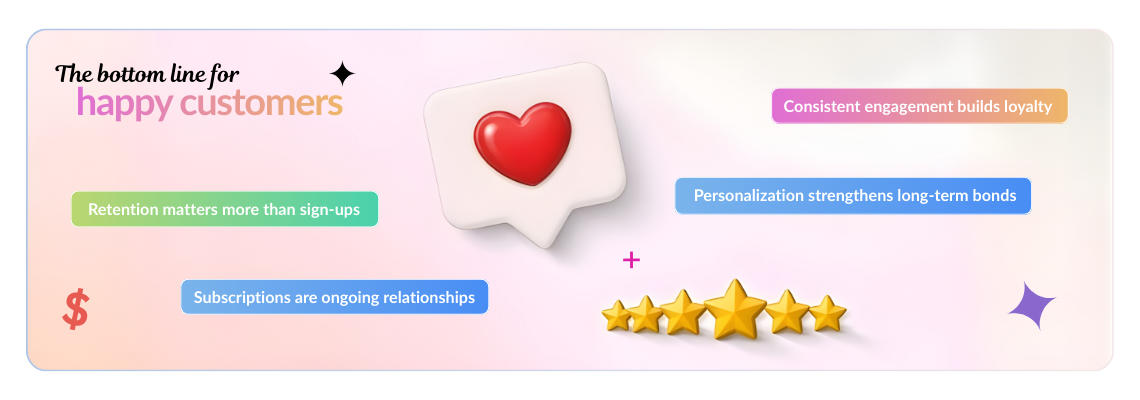
The bottom line: your subscription box's success rests on happy customers
Ultimately, the success of your subscription box business isn't measured by how many sign-ups you get initially, but by how many subscribers you retain and delight over the long haul. The subscription model is built on an ongoing relationship, and like any relationship, it requires continuous effort, communication, and a genuine desire to understand and meet the other party's needs.
By avoiding the common pitfalls we've discussed and proactively implementing strategies to personalize, communicate, and build community, you won't just keep your customers happy; you'll turn them into passionate advocates who rave about your brand. Remember, in the world of subscriptions, every single interaction is an opportunity to strengthen that bond. Treat your subscribers like gold, and they'll become the bedrock of your lasting success.