
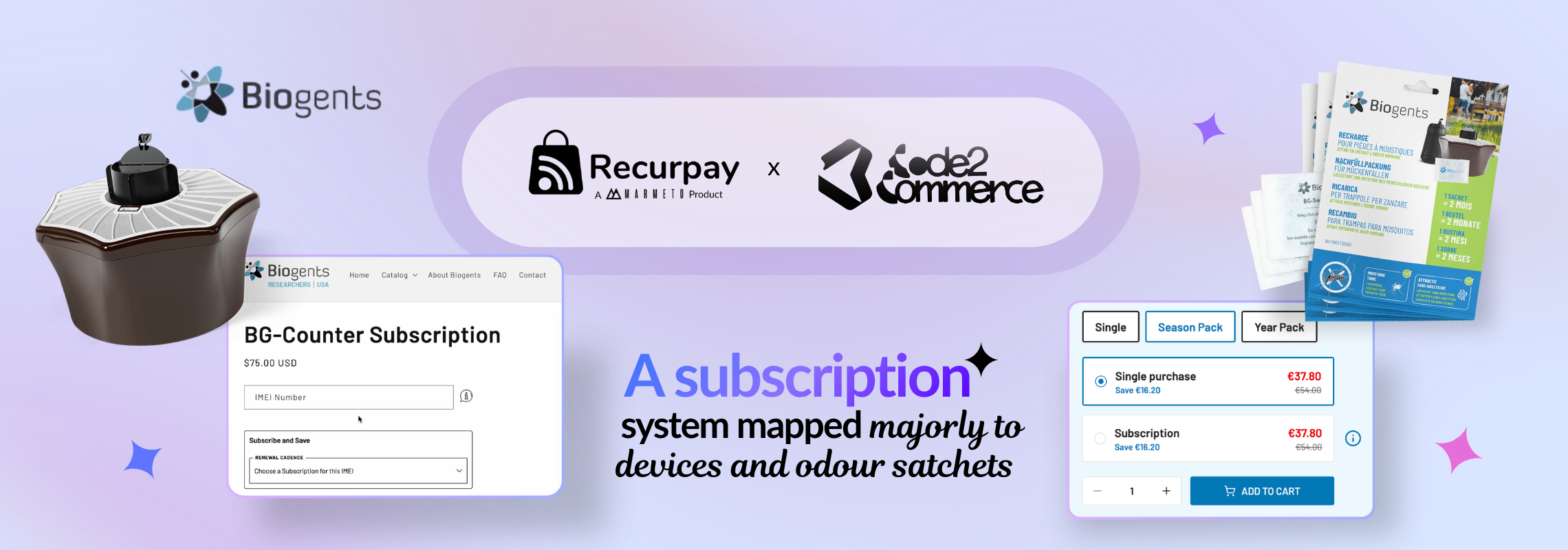


Biogents USA produces patented mosquito trap devices used by government institutions and research organizations to monitor mosquito populations and analyze disease patterns. These devices replicate human odour, capture mosquitoes, and send data to a cloud-based dashboard for analysis.
Our partner, Code2Commerce is a Shopify-focused development partner known for building complex, high-performance ecommerce systems with custom logic and deep system integrations. Biogents operates across two subscription layers:
• Device-linked subscriptions on the one store
• Odour packet subscriptions on the second store
The online store development project for Biogents’ US Shop focused on the device-linked subscription system, with the main store being migrated first. This project, carried out by Code2Commerce using Recurpay’s infrastructure, was built as a device-linked subscription system where subscriptions are mapped to individual devices through IMEI numbers.
At the core of this online store development were capabilities enabled through Recurpay that allowed Code2Commerce to design and extend the system:
• IMEI-based subscription validation and mapping
• API-driven data flow across dashboard, CRM, and third-party systems
• Code editor access for custom IMEI logic
• Customer portal aligned with device-level subscriptions
• Integration with systems like Klaviyo
• Support for individual device-level subscriptions
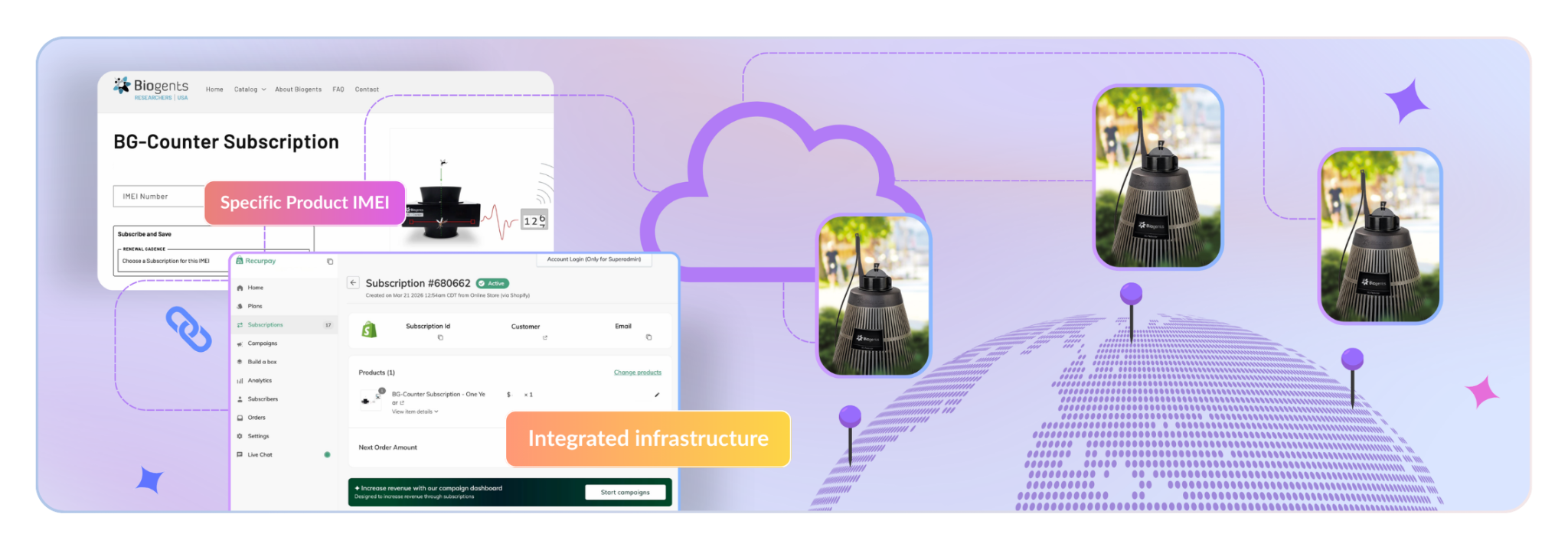
Device-Linked Subscription System Architecture
For Biogents, the subscription is structured around access to the dashboard rather than the device itself, requiring a shift from product-based logic to access-based control. Each device operates as a data-generating unit, and the subscription determines whether that data can be accessed and analyzed through the dashboard. This creates a system where the subscription layer is dependent on device identity rather than purchase alone.
This required connecting multiple layers within the same system:
• Devices generating data at the hardware level
• Cloud infrastructure storing and processing that data
• Subscriptions controlling access to the dashboard
• IMEI acting as the link across all layers
The result is a system where subscription is not introduced as a separate layer, but is embedded within how device data is accessed and used.
IMEI-Based Subscription Mapping and Validation
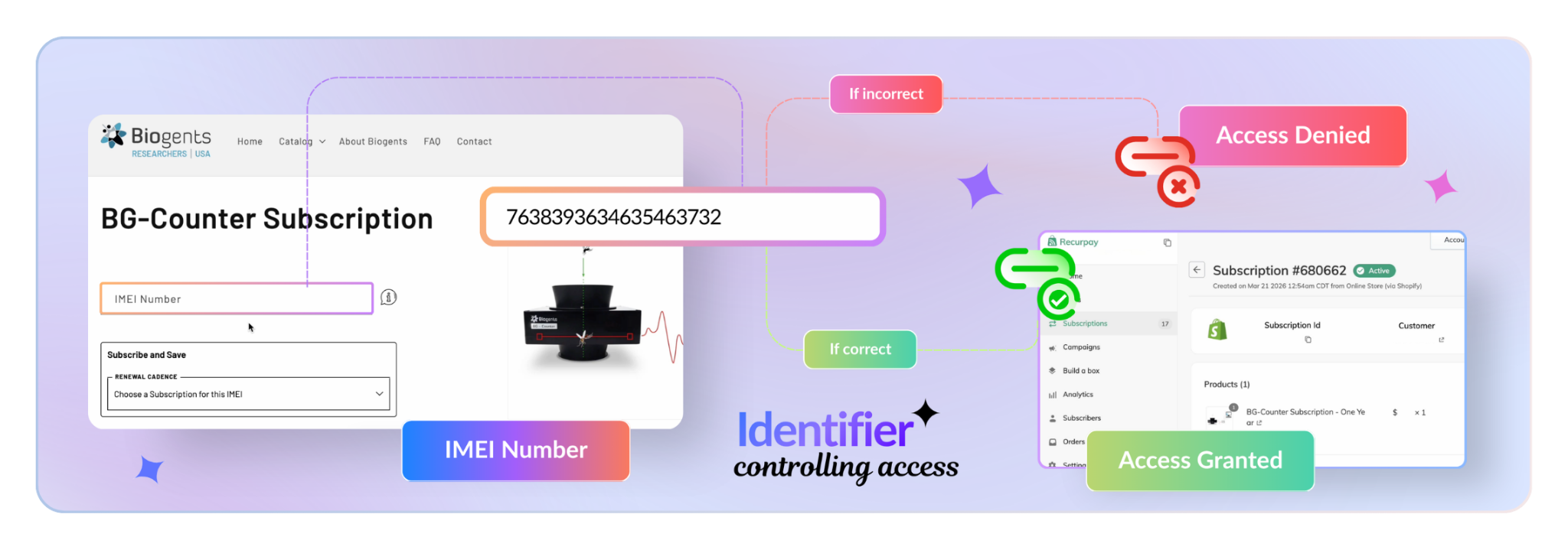
The IMEI number functions as the central identifier across the system, ensuring that every subscription is mapped to a specific device. Unlike standard subscription flows, where purchase is the starting point, this system introduces validation as a prerequisite to subscription creation. This requires the subscription flow to account for device-level verification before access is granted.
What was implemented within this structure:
• IMEI input as a required field during subscription
• Validation of IMEI through API integration
• Mapping of subscription directly to the device linked with that IMEI
• Restriction of subscription if IMEI does not match
This ensures that subscription access is controlled through verified device identity rather than generalized purchase logic.
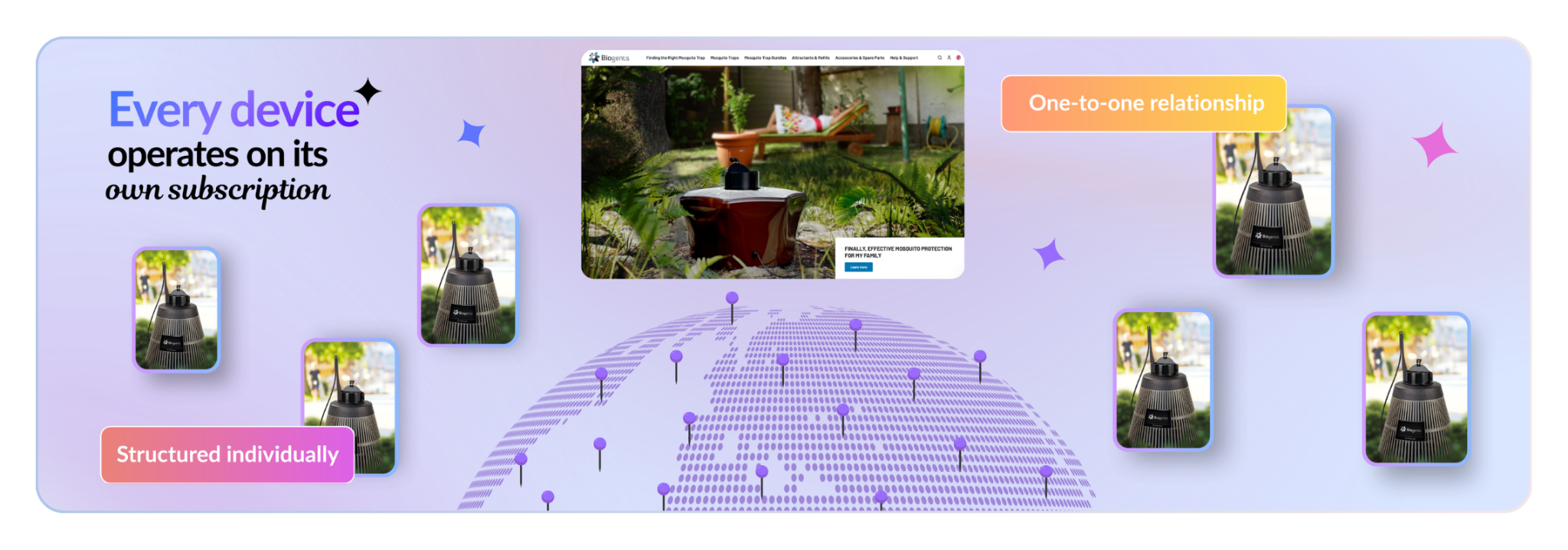
Individual Device-Level Subscription Structure
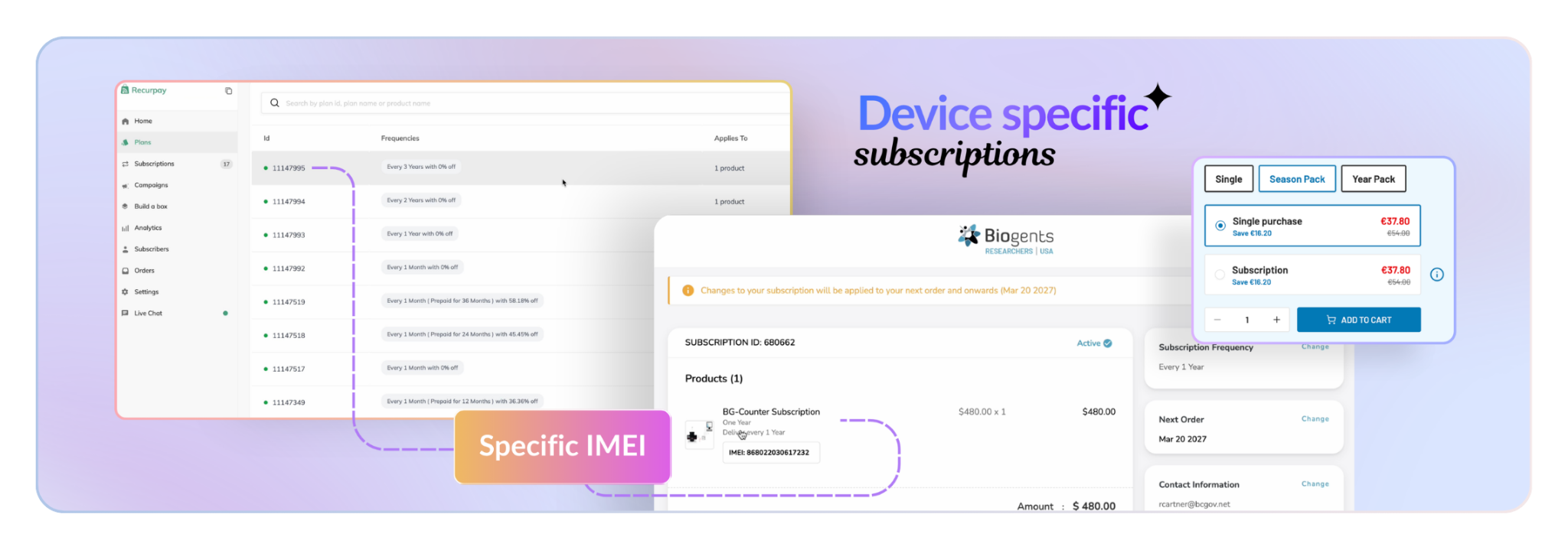
Subscriptions are structured individually per device, aligning the system with how devices are deployed and managed in real-world environments. This removes the possibility of grouped subscriptions and instead creates a one-to-one relationship between device and subscription. The system therefore reflects operational usage rather than simplifying it into bundled plans.
Within this structure:
• Each device requires its own subscription
• No bundling or aggregation of subscriptions across devices
• Subscription durations are defined as 1 month, 1 year, 2 years, and 3 years
• Subscription lifecycle operates independently for each device
This approach ensures that subscription management remains directly aligned with individual device activity.
System Integration and API-Driven Connectivity
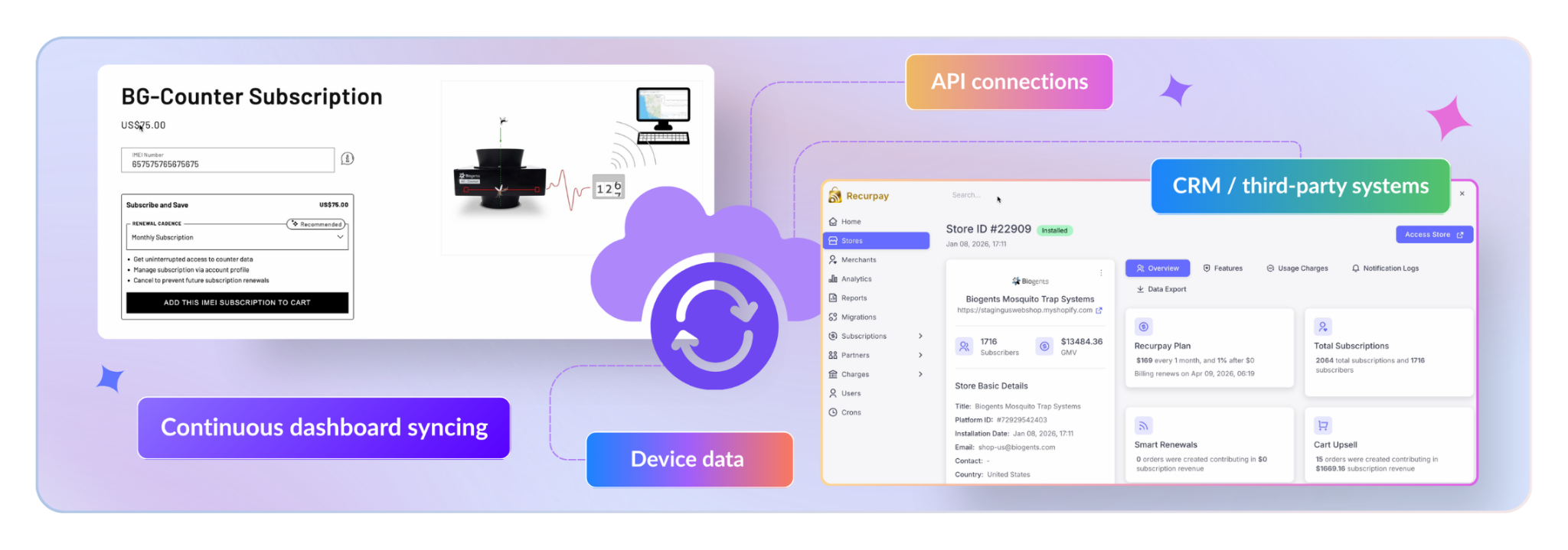
The system extends beyond the storefront and requires continuous data exchange across multiple systems used by Biogents. Recurpay’s API layer is used to ensure that subscription data, device identity, and analytics remain synchronized across platforms. This creates a connected system where subscription is not isolated but operates within a broader data infrastructure.
What was enabled through this integration layer:
• Fetching IMEI-related data for validation and mapping
• Passing subscription data to CRM systems
• Synchronizing data with third-party tools used for analysis and operations
• Maintaining consistency across Recurpay, dashboard, and external systems
This ensures that all systems reference the same device-linked subscription data without fragmentation.
Customer Portal Aligned with Device-Level Control
The customer portal is structured to reflect subscriptions at the device level rather than presenting them as generic plans. This is required in environments where multiple devices are managed simultaneously and each device operates independently. The portal therefore mirrors the same IMEI-based structure used across the system.
What was enabled within the portal:
• Visibility into subscriptions mapped to specific IMEI numbers
• Identification of the device associated with each subscription
• Alignment between portal data and system-level tracking
This ensures that subscription management remains consistent with how devices are tracked and operated.
Customization Through Code Editor and Native Integrations
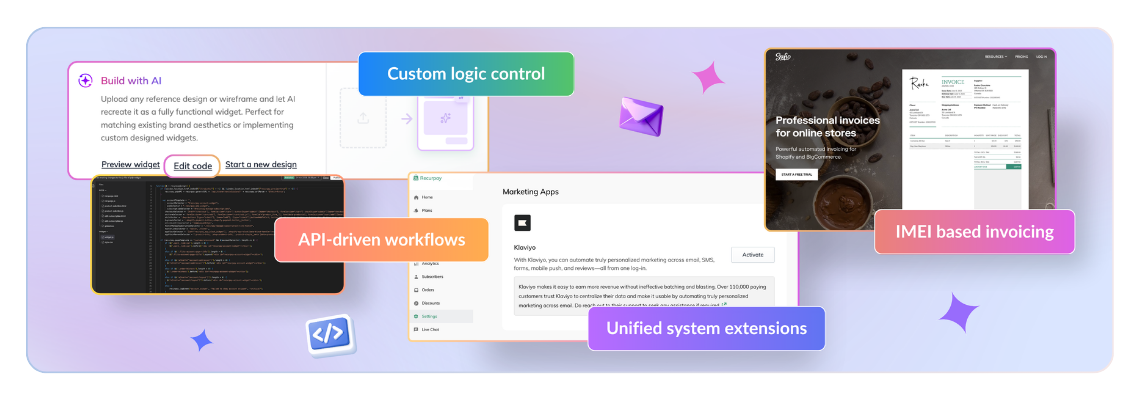
To support IMEI-based logic and multi-system connectivity, Code2Commerce extended Recurpay’s existing infrastructure using available customization layers. Instead of building parallel systems, required functionality was implemented within the existing framework through APIs and code-level modifications. This allowed the system to support non-standard subscription logic without breaking core structure.
What was implemented:
• Code editor usage for IMEI-specific logic within the subscription flow
• API integration for validation and data exchange
• Integration with Klaviyo for lifecycle communication
• Integration with Sufio for invoice generation with IMEI-based data
• IMEI number displayed on invoices to align subscription, device, and billing records
• Dunning management for subscription continuity
• Cart and account-level upsell functionality
This approach ensures that complex requirements are handled within a unified system rather than through disconnected layers.
Migration Layer and testimonial
The migration for Biogents’ main store was carried out within a 24-hour window, transitioning from the previous subscription setup that was not meeting the merchant’s requirements. The earlier system created challenges in supporting the device-linked subscription model, particularly around handling IMEI-based logic. The move to Recurpay enabled the system to be structured in alignment with these requirements.
What this involved:
• Migration from an existing subscription app with limitations
• Transition completed within 24 hours
• Alignment of the system with device-level subscription requirements
• Support for IMEI-based mapping and integrations
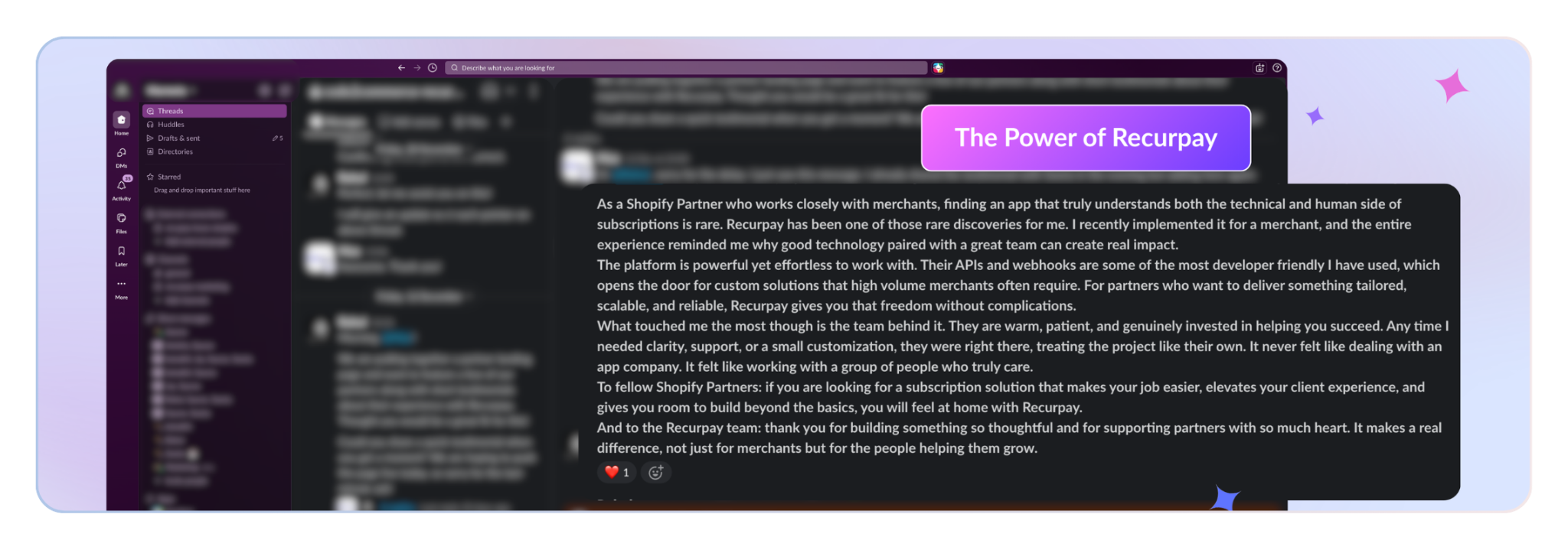
A snippet for the experience shared by our partner, Code2Commerce, “Finding an app that truly understands both the technical and human side of subscriptions is rare. Recurpay has been one of those rare discoveries for me. The platform is powerful yet effortless to work with, and their APIs and webhooks are some of the most developer-friendly I have used. It gives partners the flexibility to build tailored, scalable, and reliable solutions without complications.”
It reflects how the migration was not just a system shift, but a move towards a more stable and extensible subscription infrastructure.
Code2Commerce and Recurpay: Executing a Connected System
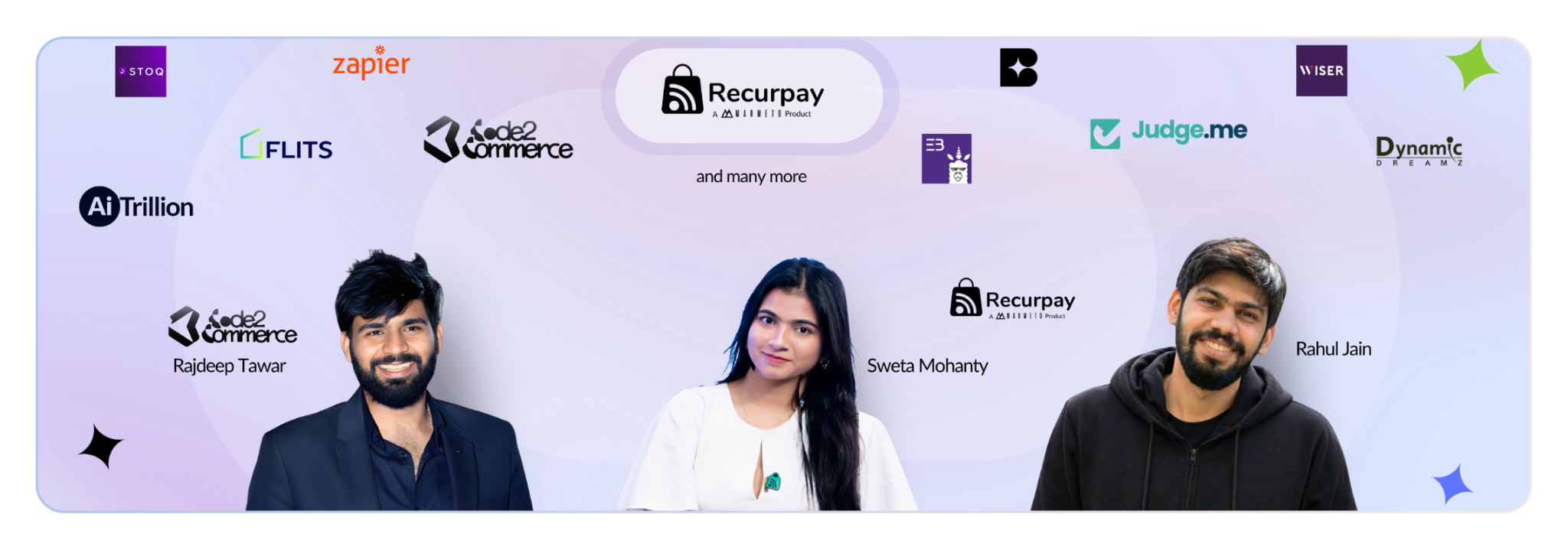
This online store development required handling device-level identity, subscription logic, and multi-system integration within a single connected structure. Code2Commerce executed this by building on top of Recurpay’s infrastructure, using its APIs, code editor, and integration capabilities to support the required logic. The system was developed without separating subscription, device, and data into independent flows.
The execution required:
• Structuring subscription around device identity
• Implementing IMEI-based validation and mapping
• Connecting subscription data across CRM and third-party systems
• Extending functionality within existing infrastructure
This reflects how complex subscription systems can be developed when infrastructure and execution remain aligned.
Conclusion
The Biogents US Shop development represents a system where subscription is applied to access rather than ownership, and where device identity determines how that access is structured. Each layer, from device to dashboard to external systems, is connected through IMEI and supported through a unified subscription framework. The system operates as a single connected structure rather than separate components.
At a system level:
• Devices generate and send data
• IMEI links each device to a subscription
• Subscription controls dashboard access
• APIs connect subscription data across systems
This creates a device-linked subscription system where hardware, software, and access remain continuously connected. The Biogents US Shop development reflects how complex, non-standard subscription systems can be structured without breaking system continuity. Code2Commerce was able to execute a device-linked model by building directly on Recurpay’s infrastructure, extending it to support IMEI-based logic and multi-system connectivity.
The system brings together hardware, subscription, and data into a single connected flow without creating parallel layers. This collaboration demonstrates how execution and infrastructure can align to support highly specific use cases.
As similar systems evolve, this approach sets a direction for how subscription can operate beyond traditional models.
FAQs:
1. What makes the Biogents subscription system different from standard ecommerce subscriptions?
The system is device-linked, where subscriptions are mapped to individual devices through IMEI numbers rather than products. Code2Commerce implemented this using Recurpay to ensure that access to the dashboard is controlled at the device level.
2. How is IMEI used within the subscription flow?
IMEI acts as the primary identifier, required during subscription to validate and map access to a specific device. Using Recurpay APIs, Code2Commerce structured the flow so that subscriptions cannot be created without a valid IMEI.
3. Are subscriptions grouped across multiple devices?
No, each device has an individual subscription, and subscriptions are not bundled. Code2Commerce used Recurpay’s infrastructure to ensure that each IMEI is independently mapped and managed within the system.
4. How does the system integrate with external tools and dashboards?
Recurpay APIs are used to fetch and pass IMEI-linked subscription data to CRM systems and other third-party tools used by Biogents. Code2Commerce implemented these integrations to ensure data consistency across all connected systems.
5. What role do Code2Commerce and Recurpay play in this system?
Code2Commerce executed the online store development and implemented the IMEI-based subscription logic, while Recurpay provided the infrastructure, APIs, and customization layers required to support device-level subscriptions and integrations.