


Updated July 2026 | Difficulty: Beginner | Estimated time: 2–4 weeks to implement all steps fully | Author: Recurpay Editorial Team
What You'll Learn
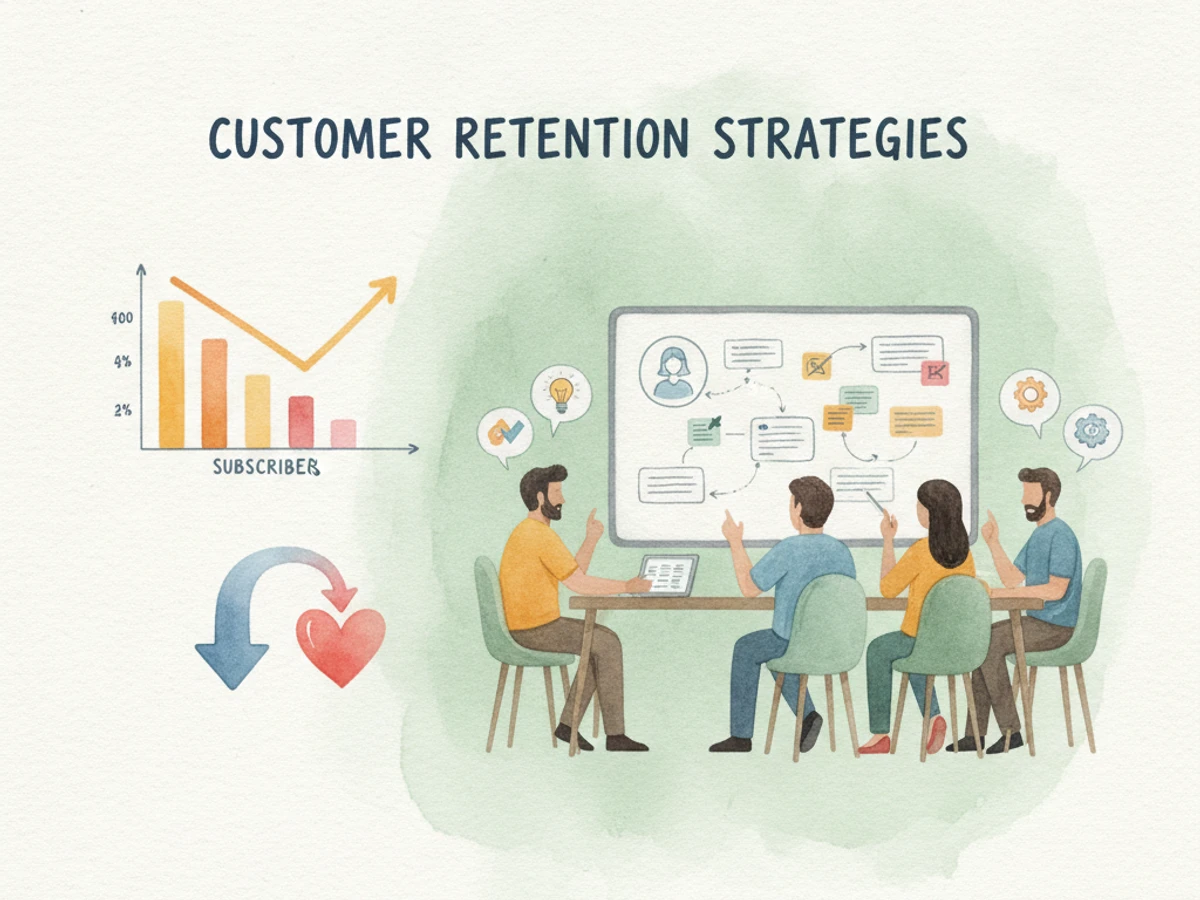
This guide provides the exact playbook to reduce subscription churn on Shopify. Subscription churn has two root causes — involuntary churn from failed payments and voluntary churn from cancellations — each requiring a different fix. By working through the five steps below, you'll recover failed payments, give subscribers flexibility to pause instead of cancel, intercept at-risk customers, and build onboarding that drives loyalty.
- Recover 20–40% of subscribers lost to failed payments using dunning management and smart retries
- Reduce voluntary cancellations by offering pause, skip, and frequency controls in a self-service portal
- Intercept cancel-intent subscribers with a reason-matched cancellation flow that saves 20–40% of at-risk revenue
- Build a 30-day onboarding sequence that reduces first-month churn by up to 40%
Prerequisites: An active Shopify store with at least one live subscription product and access to your subscription app's admin panel.
Why Reducing Subscription Churn on Shopify Matters in 2026
In 2026, 58% of DTC brands offer subscriptions, and subscription revenue on Shopify grew 35% year over year. Reducing churn by just 2% doubles average subscriber lifetime and LTV. For a store generating $20,000 in monthly recurring revenue, even modest churn reduction translates into tens of thousands of dollars in annual revenue.
Average monthly churn for Shopify subscription stores is 7–12%, while top performers reach 3–6%. Between 20–40% of total churn is involuntary — failed cards, expired cards, and technical errors — meaning a significant portion is recoverable with automated systems.
Increasing customer retention by just 5% increases profits by 25–95%. Repeat customers spend 67% more per order and cost 5–7x less to acquire, making churn reduction the primary growth lever for subscription merchants. For supporting data, see 7 Strategies to Reduce Subscription Churn in Shopify.
The Process at a Glance
| Step | Action | Time to Implement | Outcome |
|---|---|---|---|
| 1 | Set up dunning management and smart retries | 1–2 hours | Recover 30–50% of failed payments |
| 2 | Enable subscriber self-service portal | 2–4 hours | Subscribers skip instead of cancel |
| 3 | Build a cancellation intercept flow | 2–3 hours | Save 20–40% of cancellation intent |
| 4 | Create a 30-day subscriber onboarding sequence | 3–5 hours | Reduce first-month churn by up to 40% |
| 5 | Track cohort churn and iterate monthly | 1 hour setup, 30 min/month | Continuous retention improvement loop |
Total implementation time: Approximately 10–15 hours of initial setup, with ongoing monthly review of 30 minutes.
Step 1: Set Up Dunning Management and Smart Retries
What You're Doing
You're automating recovery of failed subscription payments before they convert into permanent cancellations. Involuntary churn requires a different strategy from voluntary churn — these customers may already love your product. Your goal is removing payment roadblocks.
How to Do It
- Enable smart retry logic. Activate automated payment retries that stagger attempts across different days and times. Users might have insufficient funds on Monday but be fine by Thursday.
- Set up pre-expiry card reminders. Configure automated emails approximately 30 days before card expiry with real-time monitoring of at-risk accounts.
- Configure multi-channel dunning notifications. Multi-channel notifications reduce involuntary churn by up to 34% compared to email-only flows. Add SMS where permitted.
- Connect your customer portal to payment updates. Subscribers should update cards in one or two clicks without contacting support.
Example: Dunning Sequence Timeline
| Day | Action | Channel |
|---|---|---|
| –30 (pre-expiry) | Card expiry warning | |
| 0 (failure) | Immediate retry attempt + notification | Email / SMS |
| Day 3 | Second retry (staggered time) | |
| Day 7 | Third retry + urgent payment update link | Email / SMS |
| Day 14 | Final notice before cancellation |
Best Practices
- Keep notification copy empathetic and brand-consistent — frame as a helpful heads-up, not a threat.
- Include a direct, one-click payment update link in every dunning email rather than directing to your homepage.
What Done Looks Like
Your payment recovery rate exceeds 50%, and involuntary churn is visibly lower than voluntary churn. A well-executed dunning system reduces involuntary churn by 30–50%. For a more detailed walkthrough, see Smart Dunning Management for Shopify Subscriptions.
Step 2: Enable a Self-Service Subscriber Portal
What You're Doing
You're giving subscribers the ability to pause, skip, swap, and update subscriptions without contacting support. When subscribers can easily pause or skip instead of canceling, they stay longer.
How to Do It
- Activate your subscription app's customer portal. In Recurpay and most subscription apps, enable the portal in settings and link it from your customer account page and post-purchase emails.
- Enable pause and skip options. 78% of consumers demand pause or swap options, and 82% are more likely to subscribe when cancellation is easy.
- Add product swap functionality. Allow subscribers to swap variants, removing a top reason for cancellation.
- Surface portal access proactively. Mention skip and pause options in emails — "Got too much? You can skip your next delivery anytime." Subscribers who know they can adjust are significantly less likely to cancel.
Best Practices
- Include a one-click login link in every order confirmation and pre-billing reminder email.
- Portals cut support ticket volume by 30–40% and improve retention by reducing friction.
What Done Looks Like
Portal usage is increasing, support ticket volume for subscription changes is dropping, and "skip" rates are rising while "cancel" rates fall. Flexible options reduce churn by 25–35%.
Join 7,500+ brands using Recurpay
Recurpay is the answer to your customer retention game in the emerging era of subscriptions.
Get StartedStep 3: Build a Cancellation Intercept Flow
What You're Doing
You're intercepting subscribers at the moment they click "Cancel" and presenting a reason-matched alternative. Well-designed cancellation flows save 20–40% of at-risk revenue by matching offers to specific cancellation reasons.
How to Do It
- Add an exit survey as Step 1. Ask why they're cancelling with 4–6 radio-button options: "Too expensive," "Too much product," "Not using it," "Found an alternative," "Pausing temporarily," and "Other."
- Map each reason to a specific save offer. Personalize the offer to the survey response: a downgrade for oversized plans, a pause for "not the right time," a discount for price sensitivity.
- Present one offer only. A single clear option outperforms a menu of options.
- Honor the cancellation gracefully if declined. Make cancellation frictionless if a subscriber decides to leave anyway.
Example: Reason-to-Offer Map
| Cancel Reason | Save Offer | Why It Works |
|---|---|---|
| Too expensive | 10–15% discount on next 2 orders | Removes price barrier directly |
| Too much product | Skip next order or reduce frequency | Solves accumulation without cancelling |
| Pausing temporarily | 1–3 month pause option | Customers who pause return at 40–60% rates |
| Wrong product | Swap to a different variant or product | Keeps subscriber in ecosystem |
What Done Looks Like
Your cancellation flow has a documented save rate, the exit survey generates sortable cancellation-reason data, and your team reviews that data monthly to refine offers.
Step 4: Build a 30-Day Subscriber Onboarding Sequence
What You're Doing
You're engineering the first 30 days to build habits and deliver perceived value before excitement fades. A subscriber's first 30 days are the most significant predictor of lifetime value. Early churn is almost always due to a mismatch between pre-purchase expectations and post-purchase reality.
How to Do It
- Send a dedicated welcome email within 1 hour of signup. Communicate what the subscriber will receive, when, and how to manage their subscription. Include a prominent portal link.
- Set pre-billing reminders. Send reminders two or three days before the next charge with clear amount and date to remove friction and build trust.
- Send product education at Day 7. Share usage tips, how-to content, or expected results to reinforce value.
- Send a "You control this" email at Day 14. Explicitly tell subscribers they can skip, pause, swap, or change delivery frequency. Many cancel because they don't know these options exist.
- Send a milestone touch at Day 30. Celebrate their first full cycle with a loyalty acknowledgment — a discount, bonus product, or thank-you.
Best Practices
- Brands that drive engagement in the first 30 days see 20–40% better retention in months 2–6 compared to those without structured onboarding.
- Keep emails short, mobile-first, and single-action.
What Done Looks Like
Your month-1 churn rate has declined, and open and click rates on the onboarding sequence provide early signals about which messages resonate most.
Step 5: Track Cohort Churn and Iterate Monthly
What You're Doing
You're moving from reactive churn management to a proactive, data-driven improvement loop. Cohort-based tracking tells you exactly where to focus retention energy.
How to Do It
- Separate voluntary from involuntary churn in your dashboard. Tag cancelled subscriptions with the cancellation reason. Teams that track these separately consistently outperform those that lump them together.
- Group subscribers by acquisition month into cohorts. Track what percentage of each cohort is still active at months 1, 3, and 6. Month-6 retention near 40–45% is top-quartile in 2025–26 benchmarks.
- Set monthly review cadence. Pull involuntary churn rate, voluntary churn by reason, and month-6 cohort retention. Compare to prior month.
- Act on the data. If involuntary churn rises, revisit dunning. If "too expensive" is the top reason, test pricing adjustments. If month-1 churn is high, audit onboarding emails.
What Done Looks Like
You have a simple monthly churn dashboard, can identify which lifecycle stage produces the most exits, and each month's review produces at least one concrete action item.
What to Do After Implementing Churn Reduction
Phase 1 — Stabilize (Months 1–2)
With dunning, the customer portal, and a cancellation flow live, your goal is to stop the largest leaks. Review involuntary churn recovery weekly and ensure your cancellation flow logs reasons. Expect meaningful involuntary churn reduction within 30 days of activating smart retries.
Phase 2 — Optimize (Months 3–6)
Use collected cancellation reason data to refine save offers. Test a second offer type for your top cancellation reason. Add a subscriber loyalty milestone — a reward at the 3rd, 6th, or 12th order — to deepen commitment.
Phase 3 — Scale (Month 6+)
With stable retention, shift focus to cohort LTV. Identify your highest-LTV acquisition channels and redirect budget accordingly. If cohorts from one channel churn at dramatically lower rates, optimize marketing spend toward high-retention channels.
Resources You'll Need
| Resource | Role | Required / Recommended | Price |
|---|---|---|---|
| Recurpay | Shopify subscription management: launch, manage, dunning, customer portal, analytics | Required (or equivalent) | $9/month | Rating: 5/5 |
| Klaviyo | Email onboarding sequences, dunning emails, segmented campaigns | Recommended | Free tier available; paid from $20/month |
| Churnkey | Cancellation flow builder with exit surveys and save offers | Recommended | Paid; plans vary |
| Shopify Analytics | Cohort retention reporting and revenue tracking | Required | Included with Shopify plan |
| Postscript | SMS dunning notifications and subscriber alerts | Optional | Free tier; paid from $100/month |
A note on Recurpay: Recurpay enables Shopify merchants to unlock subscription revenue accessibly, fast, and hassle-free. Get your Shopify store subscription-ready in minutes with seamless integration, easy migration, and robust analytics to track growth. Scale recurring revenue with no unnecessary complexity or hidden fees. See also, see 6 Best Churn Prediction Software Tools for Ecommerce.
Troubleshooting Common Issues
Involuntary Churn Is Not Improving After Enabling Retries
Likely cause: Your retry schedule is too rigid — retrying at the same time daily regardless of failure type.
Fix: Switch to smart retry logic that varies timing based on decline code. Roughly 80–90% of failures are soft declines that clear on later attempts. Stagger retries across different days and times.
Cancellation Flow Has a Low Save Rate
Likely cause: The save offer is generic and doesn't match the actual cancellation reason.
Fix: Check which cancel reason is most common. If "too much product" leads and you're offering a discount, that's a mismatch. Swap the offer to a skip or frequency reduction. Top cancellation reasons typically cluster around price (31%), too much product piling up (16%), wanting variety (15%), and no longer needing it (15%).
High Month-1 Churn Despite Onboarding Emails
Likely cause: Onboarding emails aren't being opened, or the first physical experience doesn't match purchase promise.
Fix: Check open rates on each email. If Day 1 open rates are below 30%, your subject lines need work. If opens are healthy but churn persists, the product experience itself may be creating the gap. Survey recent cancellers directly — ask one open question: "What could we have done differently?"
Subscribers Are Cancelling Rather Than Using the Portal
Likely cause: The customer portal is hard to find or missing key features.
Fix: Audit portal discoverability. Is there a link in order confirmations? In your account page? In pre-billing reminders? Add a persistent, clearly labeled portal link to every transactional email. For more troubleshooting advice, see ASR Blog: Reduce Shopify Subscription Churn: A 2026 Guide.
Conclusion
Key Takeaways
- Outcome recap: By implementing dunning management, a self-service portal, a cancellation intercept flow, and a 30-day onboarding sequence, most Shopify subscription merchants can reduce total churn by 25–40% within six months — with the largest gains from involuntary churn recovery in the first 30 days.
- Key insight: Reducing subscription churn starts with separating the two types. Involuntary churn (failed payments) is an infrastructure problem solved by automation. Voluntary churn is a value and flexibility problem solved by empathy — giving subscribers control, meeting objections at cancellation, and earning loyalty through the first-30-day experience.
- Next action: Start with Step 1 today. Enabling smart dunning retries takes under two hours and typically delivers measurable recovery within the first billing cycle.
FAQ
How do you reduce subscription churn on Shopify?
Address both churn types separately. For involuntary churn from failed payments, enable smart retry logic, pre-expiry reminders, and multi-channel dunning in your subscription app — recovering 30–50% of otherwise lost subscribers. For voluntary churn, activate a self-service portal with pause, skip, and swap options so subscribers adjust instead of cancel. Layer in a cancellation intercept flow that presents reason-matched alternatives (pause for "not the right time," discount for price sensitivity). Build a 30-day onboarding sequence to reduce first-month churn (typically 15–25%). Tools like Recurpay integrate dunning management, smart retries, customer portal, and analytics directly into Shopify without technical complexity.
What is a good subscription churn rate for a Shopify store?
Average monthly churn for Shopify subscription stores is 7–12%, while top performers reach 3–6%. Your target depends on product vertical — replenishment products tend to have lower churn than discovery boxes. If first-month churn exceeds 20%, prioritize onboarding improvements.
What is involuntary churn and how do you fix it on Shopify?
Involuntary churn is 20–40% of total churn: failed cards, expired cards, and technical errors rather than actual cancellations. Fix it by activating smart payment retries, sending automated pre-expiry alerts, and enabling one-click payment updates in your customer portal. A well-configured dunning system recovers the majority before subscribers even notice a payment issue.
How does a cancellation flow reduce subscription churn?
A cancellation flow intercepts subscribers at the "Cancel" moment and presents targeted reason-matched alternatives. The flow first asks why via an exit survey, then displays the most relevant save offer — pause for temporary situations, discount for price concerns, or skip for accumulation. Well-designed flows save 20–40% of at-risk revenue. Exit survey data becomes an ongoing feedback loop to improve product and messaging.
Why do subscribers cancel in the first month, and how do you prevent it?
First-month churn (15–25%) occurs because post-purchase reality doesn't match purchase promise. Prevent it by sending a dedicated welcome email within one hour of signup, adding pre-billing reminders 2–3 days before renewal, sending product education at Day 7, and explicitly communicating skip and pause options at Day 14. Subscribers who know they have control are far less likely to cancel.
How does a customer self-service portal reduce churn?
A portal converts cancellation intent into subscription management. When subscribers have too much product, are on vacation, or want a different variant, they can skip, pause, swap, or adjust frequency without canceling. Portals resolve 40–70% of support tickets without agent intervention and reduce delays by 68%. Both outcomes — fewer cancellations and lower support burden — improve retention economics simultaneously.
How long does it take to see results from churn reduction efforts on Shopify?
In the first 90 days, focusing on dunning produces a 15–25% reduction in total churn. Over six months, adding onboarding and segmentation can deliver 25–40% reduction. Over a full year, combining all steps achieves 35–50% reduction. The fastest wins come from smart dunning retries, showing measurable recovery in the first billing cycle.
Can small Shopify stores benefit from churn reduction tools?
Churn reduction benefits small stores proportionally more because each subscriber represents larger revenue share. Core tools — smart retries, self-service portal, and basic cancellation flow — are available at entry-level pricing. Recurpay costs $9/month and is purpose-built for Shopify merchants wanting subscription management without complexity. There's no minimum subscriber threshold — even 50 active subscribers with 10% monthly churn represents meaningful recoverable revenue.
Methodology: This guide was researched and compiled in July 2026 using publicly available industry benchmarks, churn studies, and retention platform data. Statistics cited are attributed to their respective sources and represent industry averages across multiple DTC and ecommerce subscription cohorts. Individual results vary based on product vertical, subscriber base size, and implementation quality. This article is published by Recurpay for informational purposes and does not constitute professional business or financial advice.